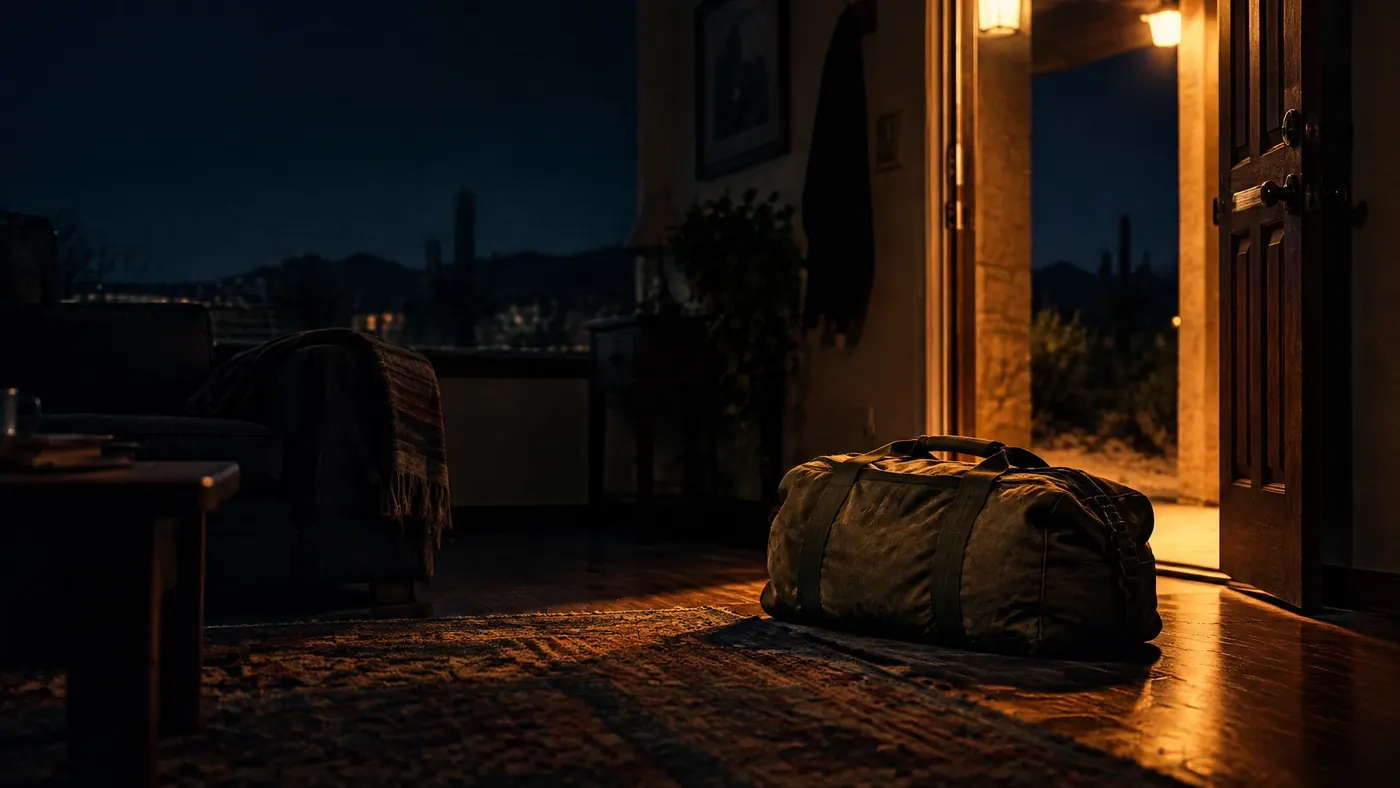
You are home, but the house is empty and still, the bed feels too soft, and the duffel is still by the door. You lie there listening for a sound that never comes, then get up to check the locks again.
Why can't I sleep now that I'm home?
Coming home changes the surroundings. It does not mean sleep switches back on the first night.
The VA’s National Center for PTSD notes that people who feel the need to stay on guard or startle easily at noise can have trouble getting restful sleep. After trauma, some people feel uneasy with silence. Others keep a television on all night, but changes in light and sound can interfere with the deepest, most needed level of sleep.
That can make a quiet bedroom feel like a problem to solve. You notice the lack of familiar background sound. You listen for movement. The stillness gives your attention nothing else to do.
Why does a quiet house make it worse?
The VA describes several ways trauma and sleep can interact. Feeling on guard can make it hard to rest. Being startled easily by noise can interrupt sleep. Worries may also get worse at night when memories that have been pushed away during the day come back into focus.
That doesn’t mean every sleepless night has one cause, or that quiet will feel difficult to everyone who has deployed. It does mean the pattern you’re noticing is recognized by the VA. You don’t have to dismiss it as weakness or assume it is “just how things are now.”
The familiar sounds you miss might have been a generator, radio traffic, or other people moving nearby. At home, there is no shift to cover and nobody else on watch. But if your body is still listening for what might happen next, the silence can feel less like rest and more like a job with no clear end.
Is it the silence or is it me?
The silence is part of the picture. It isn’t proof that something is wrong with you.
After a traumatic event, it’s common to have stress reactions, including trouble sleeping. The VA says most people start to feel better after a few weeks. If symptoms last longer than a month and cause problems in your life, they could be PTSD symptoms, but only a mental health provider can diagnose PTSD. Symptoms may also appear months or years later.
So don’t diagnose yourself based on a bad night, and don’t ignore sleep trouble that is taking a toll. The VA defines insomnia as trouble falling or staying asleep at least three nights a week, continuing for a few months or more, and severe enough to cause problems at work and at home. You can ask for help before your sleep fits that definition.
What can I change in the room tonight?
Don’t turn tonight into a full renovation or a test you can fail. Choose one small, practical change.
- Notice what you’re listening for. If you find yourself scanning the room, take a moment to name where you are and a few ordinary things you can see. You’re not trying to force a feeling. You’re taking stock of the room you’re actually in.
- Try one familiar, comfortable way to relax. That might be a breathing exercise you already know, or another simple routine you can repeat. The VA’s CBT-i Coach app includes tools to relax before sleep and suggestions for what to do when you can’t sleep.
- Make one deliberate change to sound or light. If silence feels uneasy, notice what happens when you adjust the room. The VA cautions that changes in light and sound can disrupt deep sleep, so avoid turning an all-night TV into a new requirement. Look for a steady, workable option rather than adding more stimulation.
- Write down the pattern. Note when you went to bed, when you woke, and what was happening. A sleep diary is one of the tools in CBT-i Coach.
If you’re awake and checking the doors, take one planned look rather than making the whole house a patrol route. Then choose a next step: return to bed, sit somewhere comfortable, or write down what’s keeping you alert. The point is not to force sleep. It’s to keep the next move simple.
What actually treats insomnia?
Sleep hygiene and insomnia treatment are not the same thing. The VA says sleep hygiene, habits and environmental changes that can support sleep, is not a substitute for Cognitive Behavioral Therapy for Insomnia, or CBT-I.
The VA calls CBT-I the best treatment for insomnia and recommends it over medication. It says CBT-I improves sleep in 7 out of 10 people who complete it. It usually takes six sessions and can be delivered in person or by video.
If you want to understand the options, ask a health care provider about CBT-I. The VA’s free CBT-i Coach app is designed for people doing CBT-I with a provider. It includes routine and sleep-environment tips, relaxation tools, suggestions for when you can’t sleep, and a sleep diary. The VA also has a different app, Insomnia Coach, for managing sleep problems without professional support.
When should I get help?
If sleep is affecting work, home, or your ability to function day to day, bring it up with a provider. Tell them what happens at bedtime, how often you’re awake, and whether you’re checking the house or avoiding bed. You don’t need to arrive with a diagnosis.
Veterans enrolled in VA health care have PTSD treatment options, including specialty PTSD care. Vet Centers also offer readjustment counseling to eligible veterans and current service members.
Poor sleep can affect reaction time, learning and memory, mood, thinking, and concentration. The VA also lists thinking about suicide or self-harm among possible effects of poor sleep. If you’re thinking about suicide or self-harm, reach out now: call or text 988. Veterans and service members can call 988 and press 1. If there is immediate danger, call 911.
Where does Coach Jeff fit?
Coach Jeff is an AI companion made by MyBFF Coach, not a therapist and not a crisis line. Coach Jeff can be a friend in the hours between other support. A place to talk through what’s on your mind when the house is quiet and the people you care about are asleep. Talk to Coach Jeff.