If you deployed with the Guard or Reserve, then came home to a civilian job and a quiet house, the care system may not be obvious. Especially if you joined a new unit for that deployment and came back without an established military family close by.
You do not need to figure out every rule before making a call. Start with the right door.
Why can it be harder to get care when you’re Guard or Reserve?
Active duty is full-time. The Reserve is part-time, and Reservists may be placed on active duty under state or federal orders. The National Guard is part of the Reserve and serves both state and nation. Those differences matter when you come home and try to work out where care is available.
VA News describes one hard part plainly: civilian life does not have the same military structure of accountability, supervision, and battle buddies who might notice when someone is struggling. An especially tough stretch can be joining a new unit for a deployment, then managing deployment stress and readjustment without the support of an established military family.
You may have had a team during the deployment and still feel on your own now. You may have a civilian job, bills, family responsibilities, and no base down the road to point you toward help. That is a real access problem, not proof you are ineligible for every option.
Traditional Guard and Reserve members who need PTSD treatment cannot simply go to a military treatment facility as though they were full-time active duty. VA News says they may work with behavioral health officers to identify insurance options, including TRICARE Reserve Select or civilian insurance. It also points to VA, Vet Centers, community resources, and nonprofits as possible paths.

Do you qualify for VA health care if you were never on federal active duty?
VA’s eligibility rule for current or former Reserve and National Guard members is specific: you must have been called to active duty by a federal order and completed the full period for which you were called or ordered. Active-duty status for training purposes only does not qualify for VA health care under this rule.
That is a starting point, not a reason to rule yourself out based on memory or guesswork. Orders and service dates can get complicated. Ask VA to review your situation rather than deciding on your own that the answer is no.
If you meet VA’s service and discharge requirements, other eligibility details may also matter. For example, VA says a qualifying combat Veteran discharged or released on or after September 11, 2001 may receive enhanced eligibility, placing them in a higher priority group. Check the current rules with VA, because a deployment history alone does not settle every eligibility question.
You can apply for VA health care online. If you want to talk through whether you qualify, call 800-827-1000 and ask about an eligibility counselor. For help filling out the application, call 877-222-8387.
What if you don’t qualify for VA health care?
A “no” to VA health care does not automatically mean “no care for PTSD.” VA says that even if you do not qualify for VA health care benefits, you may still be able to get care for certain needs, including PTSD and other mental health problems. Call 800-827-1000 and ask what options apply to you.
You can also ask about Vet Center eligibility. The rules are separate from VA health care eligibility, so do not assume the result of one question settles the other. A Vet Center can review your service and circumstances and, if you do not qualify, says it will work with you to identify community resources.
If you are still connected to a unit, VA News also says a behavioral health officer may help identify insurance options such as TRICARE Reserve Select or civilian insurance. The practical move is to ask what route is available for your current status, not to spend a week trying to decode the system alone.
Can you use a Vet Center if you’re in the Guard or Reserve?
Possibly. Vet Center eligibility includes Veterans and current service members, including Guard and Reserve members, who served on active military duty in a combat theater or area of hostility.
There is also a specific route for a current Reserve Component member assigned to a military command in drilling status, including active Reserves, who has a service-related behavioral health condition or psychological trauma that affects quality of life or adjustment to civilian life. Vet Centers also say family members may participate when that supports the Veteran or service member’s goals.
Call the Vet Center Call Center at 877-927-8387. Explain your service status and ask them to check eligibility. You can also find a Vet Center. Their eligibility page says they look for reasons and means to qualify people; if they cannot help, they will work to find available community resources.

What does PTSD actually look like when it shows up at home?
It may not look like one dramatic moment. The National Center for PTSD describes four broad symptom types: reliving the event, avoiding reminders, having more negative thoughts and feelings, and feeling on edge or keyed up. Trouble sleeping, irritability, nightmares, or pulling away from people can fit into those broad categories, but none of those signs alone proves you have PTSD.
The VA says PTSD can only develop after going through or seeing a life-threatening event. Stress reactions after trauma are common, and many people start to feel better after a few weeks. If symptoms last longer than a month and cause problems in your life, it could be PTSD; only a mental health provider can diagnose it.
You do not need to walk into a phone call with a diagnosis. You can say that you deployed, that things have been different since you got back, and that you want to know what care you can access. That is enough to start asking for the right next step.
What if the closest VA is three hours away?
Do not make distance your eligibility decision. VA News says finding resources can be especially challenging in rural areas and suggests checking VA, Vet Centers, community resources, and nonprofits. A Vet Center may be a different place to start than a VA medical facility, depending on your eligibility and what is available near you.
Ask the person you reach what options are available where you live. If you have insurance, ask what it covers and whether a behavioral health officer can help you identify providers. If the first person cannot answer, ask who can.
Keep the first goal small: get a name, a number, or a clear next step. You do not have to solve the entire system in one call.
What should you do first?
Make one call. Use the line that matches the question you have:
- Vet Center eligibility: Call 877-927-8387. Tell them you deployed with the Guard or Reserve and you want to know whether you qualify for Vet Center services and what the next step is.
- VA health care eligibility: Call 800-827-1000. Tell them you served in the Guard or Reserve and were called to active duty, and ask whether an eligibility counselor can review whether your orders and service qualify you for VA health care.
- Help with a VA application: Call 877-222-8387 and ask for help filling out the health care application.
- If you are in crisis: Call or text 988. Veterans and service members can press 1 when calling.
Have whatever service and order information you can find nearby, but do not let a missing document stop you from asking the question. If you are not sure whether a Vet Center or VA is the right place, call one and ask them to direct you. Your next move is a conversation, not a perfect benefits file.
Where does Coach Jeff fit?
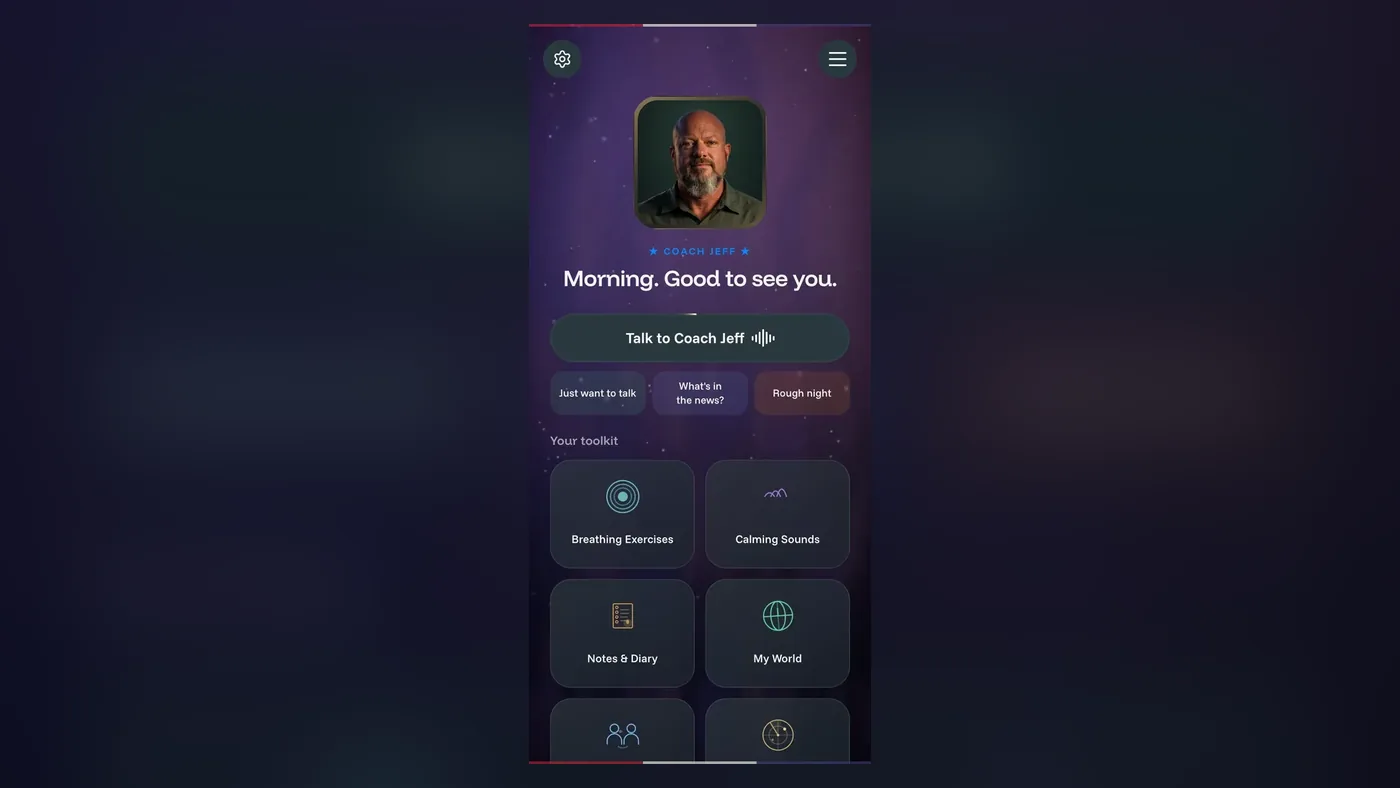
Coach Jeff is an AI companion made by MyBFF Coach, built for people who did the job. It remembers what you have told it and is available at 0200, when the base is ten years behind you and nobody is on duty.
Talk to Coach Jeff. Coach Jeff is not a therapist, not a crisis line, and not a replacement for care. Use the VA and Vet Center routes above to check eligibility and connect with care.